

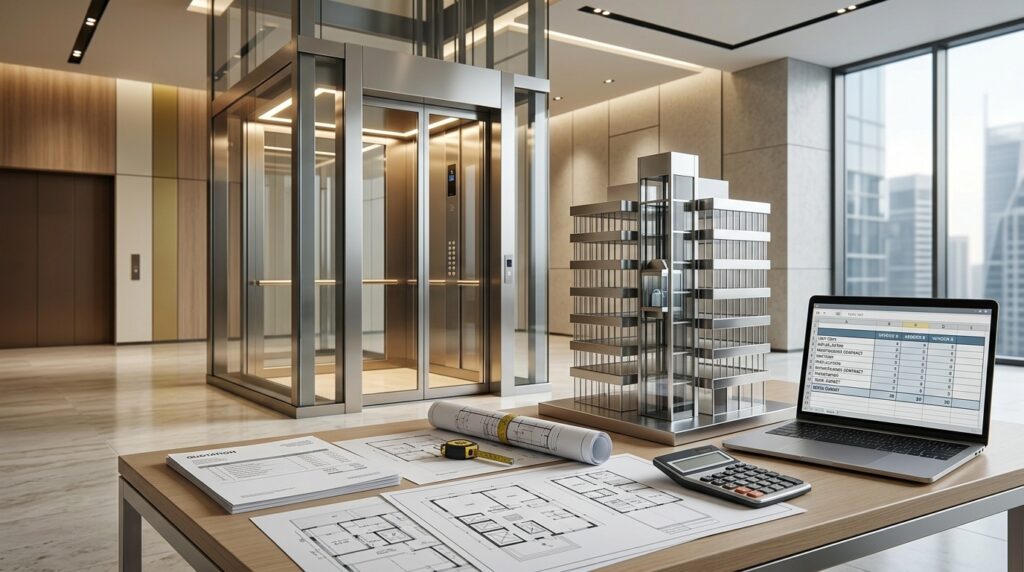
If you are searching for the elevator price in Pakistan, you have probably noticed one thing already: nobody can give you a single honest number without knowing your building. Two lifts that look similar from the outside can differ a lot in capacity, safety features, civil work and long-term service, and each of those changes the final cost.
This guide does not throw out a random figure. Instead, it explains what actually decides lift cost in Pakistan, which expenses buyers often forget, how to prepare a realistic budget, and how to compare quotes properly. It is written for homeowners, builders, hospital and plaza owners, and anyone planning a new lift or upgrading an old one.
Quick Answer: Why There Is No Single Elevator Price
An elevator is not an off-the-shelf product. It is designed around your shaft, your floors and the way people will use it. That is why serious suppliers quote against a defined scope after understanding the project. Keep these points in mind as you read:
- Price depends on the lift type, capacity, number of stops, site conditions, finishes, safety features and brand.
- Plan your budget in three parts: the lift equipment, installation with civil work, and ongoing maintenance and power.
- Compare written quotes with the same scope, not just the bottom-line number.
- Ask about standards, warranty, spare parts and maintenance before you pay any deposit.
- A site survey is the only way to get an accurate quotation.
What Decides the Price of an Elevator?
These are the main factors that move a lift quotation up or down. Use the last column as a checklist when you speak to suppliers.
| Cost factor | How it affects the price | What to confirm |
| Lift type | Traction, machine-room-less, hydraulic, home, freight and hospital lifts use different equipment and need different space. | Why this type suits your building and traffic. |
| Capacity and speed | A higher load or faster travel needs a stronger machine, drive and safety system. | Capacity in kg and persons, and speed in metres per second. |
| Number of stops and travel height | More floors mean more doors, longer guide rails and ropes or a longer hydraulic jack. | The exact stops and total travel height used in the quote. |
| Shaft, pit and overhead space | Existing dimensions may suit some models and not others, and changes to the structure add cost. | Which dimensions the quote assumes and who is responsible for civil work. |
| Cabin and door finish | Stainless steel, glass, panoramic walls, flooring, lighting and door type all change the price. | A written finish specification, ideally with samples or photos. |
| Control system and drive | Modern drives and controllers give smoother rides and better efficiency, and are priced accordingly. | The controller and drive type, and the brand of main components. |
| Safety features | Door sensors, overspeed protection, emergency lighting, intercom and fire or rescue modes add components. | The complete list of safety devices included as standard. |
| Power backup | An automatic rescue device or backup supply adds cost but helps passengers during power cuts. | What happens to the lift and passengers when the power fails. |
| Brand and origin | Imported and locally assembled equipment are priced differently and differ in spare part availability. | Where the main parts come from and how spares are supplied. |
| Taxes and duties | Imported equipment and components may carry customs duties and taxes that change over time. | Whether the quote includes or excludes duties and taxes. |
| Installation and commissioning | Labour, site equipment, testing and handover are part of the real cost. | What is included, who supervises, and the expected timeline. |
Lift type and use matter most
The first decision is the type of lift, because it shapes everything else. A busy commercial building, a hospital, a small home and a warehouse all need different solutions. If you are still choosing between technologies, our guide on passenger lift vs hydraulic lift explains how each works, where each fits best and what to consider for your space. Remember that the cheaper option on day one is not always the cheaper option over the life of the lift, so look at total cost, not only the purchase price.
Floors, capacity and site conditions
Every extra stop adds a landing door, more rail and more installation work. Capacity and speed decide how strong the machine and the safety components must be. Site conditions are the quiet cost driver: a new building with a well-planned shaft is very different from an existing building where a shaft must be created or modified. This is why a proper site survey matters more than any online calculator.
Costs People Often Forget
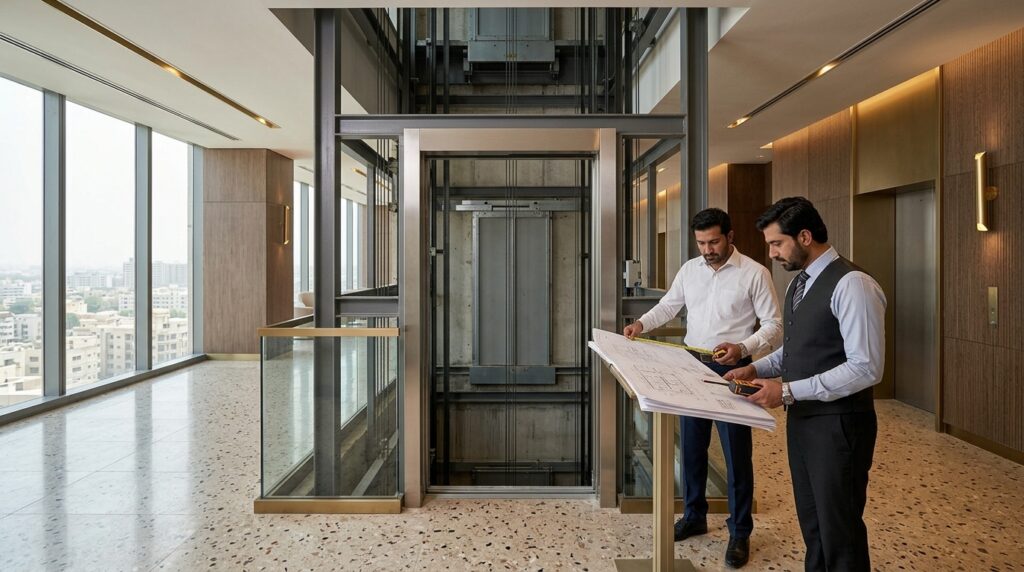
Many buyers compare only the lift quotation and are surprised later. Plan for these items as well, and ask who is responsible for each one:
- Civil and structural work: shaft walls, pit, machine room or overhead, and any strengthening or openings.
- Electrical work: a suitable power supply, wiring, earthing, and backup arrangements.
- Finishing around landing doors: tiles, cladding and paint after the doors are fitted.
- Approvals: building and safety approvals can differ by city and authority, so check the requirements for your location early.
- Transport and site access: delivery, lifting equipment and storage of materials on site.
- Customs duties and taxes: if the equipment or components are imported, check the current rules in the Pakistan Customs Tariff published by the Federal Board of Revenue. Rates can change, so ask your supplier to state clearly what is included.
- Maintenance and electricity: a lift keeps costing money after installation, so budget for servicing and power from the start.
How to Build a Realistic Elevator Budget
- Define the purpose. Is it for a home, an apartment building, an office, a hospital or goods? Purpose decides capacity, speed and safety needs.
- Count the stops and measure the travel height. Note every floor the lift must serve.
- Check the space. If a shaft exists, record its width, depth, pit depth and overhead height. If not, plan where it can go.
- Decide the finish level. Separate must-have features from nice-to-have upgrades so you can compare quotes fairly.
- Request written quotations. Ask at least two suppliers to quote against the same written requirements.
- Add the hidden items. Include civil work, electrical work, approvals, taxes and finishing to your total.
- Plan the running costs. Add a maintenance contract and electricity to your yearly budget.
When you are ready, you can share these details with us through the request a quote page, and our team will discuss your requirements.
What a Good Elevator Quote Should Include
A clear quotation protects you from surprises. Before you accept one, check that it states the following in writing:
- Lift type, capacity (kg and persons), speed and number of stops.
- Cabin and door specification, including finishes and dimensions.
- Control system, drive and the main safety devices.
- The standards the lift is designed and tested to.
- Exactly what installation, testing and commissioning cover.
- Who handles civil work, electrical connections and finishing.
- Whether taxes and duties are included.
- Warranty period and what it covers.
- Maintenance terms, response time and spare part support.
- Delivery and installation timeline, and payment schedule.
How to Compare Elevator Quotes Fairly
The lowest number is not always the lowest cost. Before you compare totals, line the quotes up side by side and check that they describe the same lift. Watch out for these common traps:
- A lower price that leaves out installation, civil guidance or taxes.
- Different capacities, speeds or door types hidden inside similar-looking totals.
- Vague wording such as “standard components” with no brand or origin named.
- No maintenance plan or an unclear warranty.
- Pressure to pay a large advance before the scope is agreed in writing.
If a supplier cannot explain a line in plain language, ask for it to be rewritten. A good company is comfortable doing that.
Safety and Standards: Do Not Choose on Price Alone
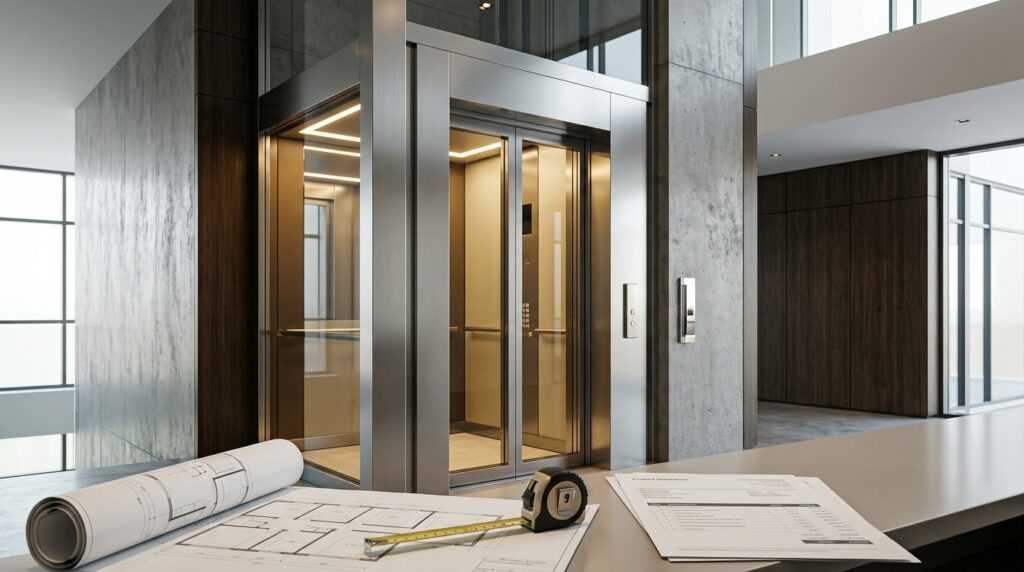
A lift carries people every day, so safety is not the place to save money. Ask which safety standard the lift is built and tested to. Standards such as EN 81-20 and EN 81-50 and ISO 8100-1 are widely referenced around the world for passenger lifts. For national information on standards and conformity assessment in Pakistan, you can visit PSQCA (Pakistan Standards and Quality Control Authority). Ask your supplier for the documents that confirm testing and handover, and keep them for future inspections.
Maintenance and Running Costs
A lift needs regular servicing to stay safe, quiet and reliable. When you compare suppliers, ask how often they visit, what is included in a maintenance contract, how emergency calls are handled and how quickly spare parts can be sourced. A supplier with a local team and a clear service process can often save you more in downtime than a small difference in purchase price. You can read more about what we offer on our elevator and lift services page, and see examples of our completed projects to understand the kind of work involved.
Common Mistakes to Avoid
- Choosing the cheapest quote without checking what is included.
- Ordering a lift before confirming shaft, pit and overhead dimensions.
- Ignoring power cuts and not asking about backup or rescue options.
- Forgetting civil, electrical and finishing costs in the budget.
- Skipping a written maintenance agreement.
- Not asking for documents on standards, testing and handover.
Get a Quote Based on Your Project
The best way to understand the elevator price for your building is to start with a conversation about your requirements. Share your floors, capacity needs and site details, and the AG Elevators team can guide you on suitable options across Rawalpindi, Islamabad and Peshawar. To begin, simply contact us and tell us about your project.
Frequently Asked Questions
How much does an elevator cost in Pakistan?
There is no honest single figure, because the cost depends on the lift type, capacity, number of stops, site conditions, finishes, safety features and the brand and origin of the equipment. The reliable way to get a real number is to share your building details and ask for a written quote based on a site survey.
Why do elevator quotes differ so much between companies?
Quotes usually differ because the scope is different. One quote may include civil work guidance, taxes, installation, testing and a maintenance plan, while another may cover only the equipment. Differences in capacity, door type, control system, cabin finish, component brand and warranty also change the price.
What information do I need to get an accurate lift quote?
Prepare the building type, number of floors and stops, travel height, expected number of passengers or load, shaft and pit dimensions if they already exist, available power supply, and the finish level you want. Photos or drawings of the shaft area help a lot.
Does the quoted price include installation?
Not always. Some quotes cover supply only, while others include delivery, installation, testing and commissioning. Always ask for the scope in writing, and confirm who is responsible for civil work, electrical connections and finishing around the landing doors.
How much does yearly lift maintenance add to the cost?
It depends on the lift type, the number of stops, how heavily the lift is used and what the maintenance contract covers. Ask each supplier to explain visit frequency, what parts and call-outs are included, and how quickly they respond to breakdowns.
Can a lift be installed in an existing building?
In many cases yes, but it depends on available space, the structure and the location of the shaft. A site survey by a qualified lift company is needed before anyone can confirm feasibility, so avoid anyone who promises it without seeing the building.