

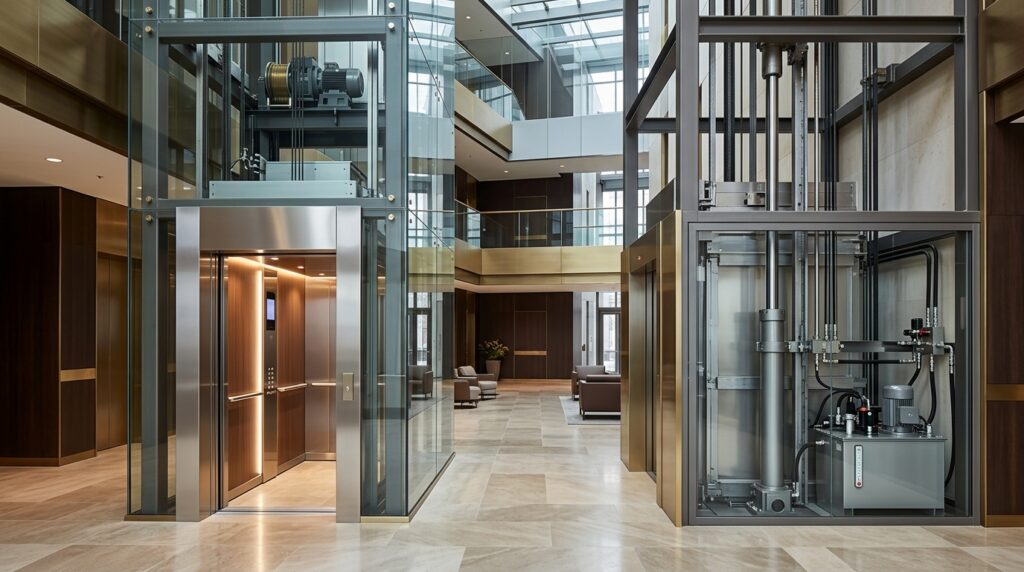
Choosing a lift is one of the biggest decisions in any multi-storey building. Two of the most common options are the passenger lift and the hydraulic lift, and they work in very different ways. The right choice affects your space, your budget, your running cost and how smooth the ride feels every day. In this guide, AG Elevators explains both types in simple words so you can pick with confidence.
Note: in this article, “passenger lift” means the common rope-driven (traction) lift that moves people in homes, offices, hotels and apartments.
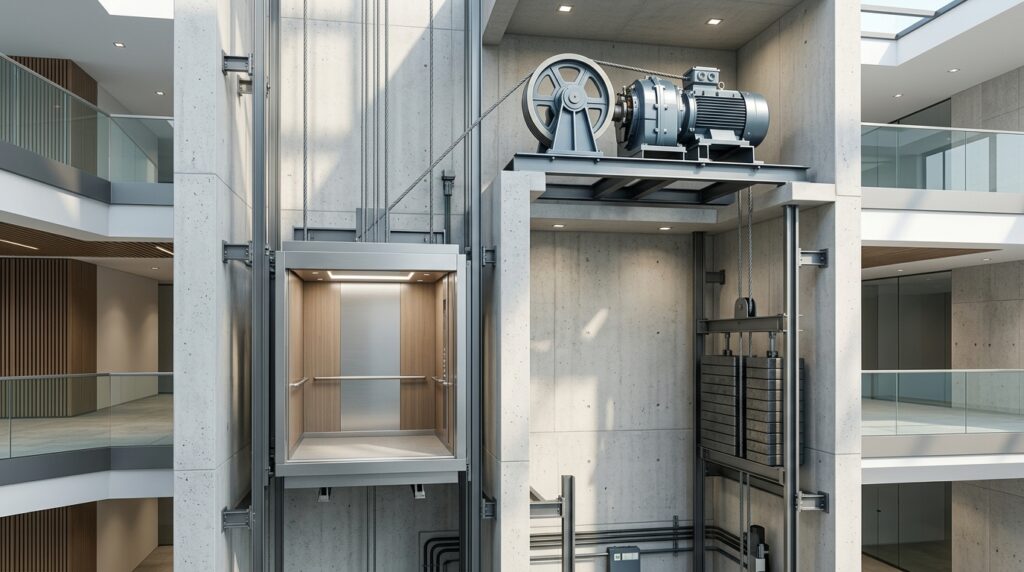
How a Passenger (Traction) Lift Works
A traction lift hangs from strong steel ropes. The ropes pass over a wheel turned by an electric motor, and a counterweight on the other side balances the cabin. Because the counterweight carries part of the load, the motor does less work. This design is fast, smooth and efficient, which is why it is the standard choice for most buildings that need to move many people.
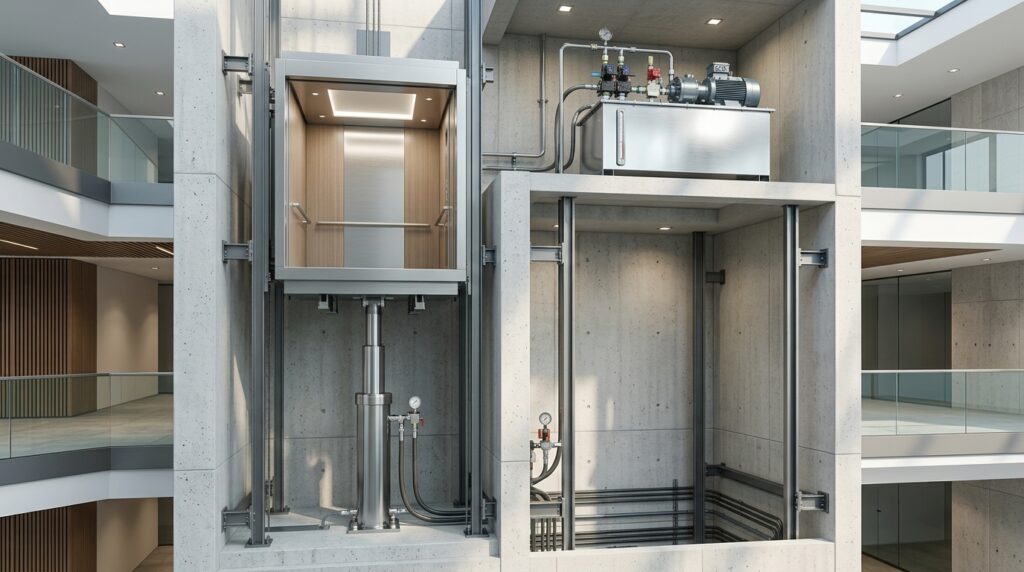
How a Hydraulic Lift Works
A hydraulic lift is pushed up by oil pressure. A pump sends oil into a cylinder, and the piston inside raises the cabin. To go down, the oil is released and the cabin lowers under its own weight. This simple design is reliable and works well for buildings with only a few floors. It is also common for goods lifts and heavy loads.
Passenger Lift vs Hydraulic Lift at a Glance
| Feature | Passenger (Traction) Lift | Hydraulic Lift |
| Best for | Medium and tall buildings | Low-rise buildings |
| Speed | Faster | Slower |
| Ride | Smooth and quiet | Smooth, but slower |
| Energy use | Usually lower | Usually higher going up |
| Shaft requirements | Overhead space needed (or machine-room-less design) | Needs a pit and a cylinder |
| Heavy loads | Good | Very good |
| Typical use | Offices, hotels, apartments, plazas | Small buildings, goods lifts, low-rise sites |
When a Passenger Lift Is the Better Choice
Choose a traction lift when your building has many floors or many users. It handles frequent trips well and keeps waiting time short. It also suits buildings where speed and comfort matter, such as hotels, offices and apartment blocks. If you are comparing models, the lift types on the services page show the kinds of passenger lifts available.
When a Hydraulic Lift Is the Better Choice
A hydraulic lift is a strong option for low-rise buildings with a few floors. It is often used where the lift must carry heavy loads, such as workshops, warehouses and some hospitals. Because the machine sits near the bottom, it can also suit buildings where there is no space above the top floor.
Five Questions to Help You Decide
Ask yourself these questions before you choose:
- How many floors will the lift serve?
- How many people will use it each day?
- Will it carry mostly people or heavy goods?
- Is there space above the top floor, or space for a pit below the ground floor?
- How important are speed and low running cost to you?
If your answers point to many floors and many users, a traction lift is usually the better fit. If they point to few floors and heavy loads, look closely at a hydraulic lift.
Do Not Forget the Building Itself
The lift must fit the building, so the shaft, pit and top space all matter. A beautiful lift is useless if the shaft is too small or the top floor has no room for it. If you are still designing your building, speak to a lift company before the structure is finished. You can see how different buildings were handled in the past projects.
Safety and Maintenance for Both Types
Both lift types need regular service to stay safe and reliable. Doors, sensors, brakes and emergency devices should be checked on a schedule, and any strange noise or uneven stopping should be reported at once. Trained engineers make the difference between a lift that runs for years and one that breaks down often. You can learn about the people behind the work on our team page.
Not sure which type your building needs? Get a quote and tell us about your building.
Other Lift Types You Can Consider
Passenger and hydraulic lifts are not the only choices. Panoramic lifts add glass views for malls and hotels, hospital bed lifts carry stretchers and beds, and freight lifts move heavy goods. Home lifts suit villas and houses with more than one floor. The best option depends on who or what the lift will carry, and how the building is used.
Final Words
The right lift depends on your floors, your users, your space and your budget. Passenger lifts give speed and efficiency in taller buildings, while hydraulic lifts give strength and simplicity in low-rise ones. If you want expert advice for your own building, contact us today. Ready to move forward? Get a quote from AG Elevators and plan the right lift for your building.
Frequently Asked Questions
Which is better, a passenger lift or a hydraulic lift?
Neither is better in every case. A passenger (traction) lift suits taller buildings and heavy daily use, while a hydraulic lift suits low-rise buildings and heavy loads.
Is a hydraulic lift slower?
Yes. Hydraulic lifts generally travel slower than traction lifts, which is one reason they are chosen for buildings with few floors.
Can a hydraulic lift be used in a home?
Yes, it can suit a house with a few floors, depending on the space for the pit and the machine. A lift company can check the building and recommend the right option.
Which type needs less space?
It depends on the building. Traction lifts need space above the top floor or a machine-room-less design, while hydraulic lifts need a pit and a cylinder.
Do both types need regular maintenance?
Yes. Regular inspection keeps either type safe, smooth, and reliable for many years.